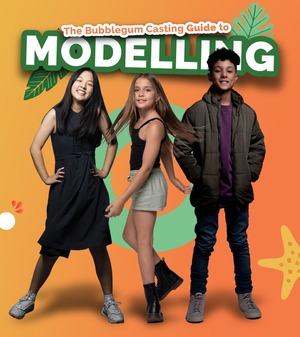
When most parents picture teen modelling, they think of photo shoots, glossy magazines, and maybe a portfolio gathering dust on a shelf. But after representing young Australians since 1981, we can tell you the real teen modelling benefits go far beyond anything you’ll see on camera. The skills your teenager develops on set — communication, resilience, time management, financial literacy — are the same qualities employers, universities, and life coaches spend years trying to teach.
If you’re a parent weighing up whether modelling is right for your 13-to-17-year-old, this guide will walk you through what actually happens when teens step into professional work, and why so many parents tell us it became one of the best decisions their family ever made.
Why Is Teen Modelling More Than Just Photos?
Here’s the honest truth: a photo is the end product, not the experience. By the time your teen’s image appears in a catalogue, on a billboard, or in a TV commercial, they’ve already done the real work — showing up on time, taking direction from adults they’ve never met, problem-solving when things go wrong, and representing a brand with professionalism.
Think of a modelling job as a mini internship. Your teen walks onto a set with a director, a stylist, a photographer, a client representative, and sometimes a crew of twenty. They’re expected to listen carefully, respond to feedback without ego, and deliver a product the client is paying real money for. That’s workplace experience most adults don’t get until their mid-twenties.
We’ve watched shy 14-year-olds transform into confident 17-year-olds who can hold a boardroom-level conversation. We’ve seen teens who struggled with reading body language learn to collaborate with creative teams. And we’ve had parents email us years later saying their child’s first modelling job was the foundation for everything that came after — university applications, part-time jobs, even small business ventures.
How Does Modelling Build Teen Confidence?
Confidence isn’t about being loud or extroverted. Real confidence is the quiet certainty that you can handle whatever the day throws at you — and modelling builds that in a way few other activities can.
When a teenager walks onto a set, they’re surrounded by adults who take them seriously. Nobody treats them like a kid. They’re asked for their opinion on a pose, consulted about what feels comfortable, and trusted to do their job. For a teen who spends most of their week being told what to do at school, that shift is enormous.
There’s also the powerful experience of hearing professional feedback — positive and constructive — from people who aren’t family. When a photographer says, “That was a brilliant take,” your teen learns to internalise praise from a neutral source. And when a stylist asks them to try something differently, they learn that feedback isn’t criticism, it’s collaboration.
Research published in adolescent psychology journals consistently shows that teens who participate in structured, goal-oriented activities with adult mentorship report higher self-esteem and stronger identity development than peers who don’t. Modelling ticks every box on that list.
And here’s something parents often don’t expect: rejection becomes a teacher, not a wound. Every model, at every level, hears “no” far more often than “yes”. Teens who learn early that not booking a job isn’t personal — it’s about hair colour, height, client brief, or timing — develop resilience that serves them for the rest of their lives. By the time their peers are nervously applying for their first casual jobs, our teens have already been to fifty castings.
What Professional Skills Do Teen Models Learn?
If you wrote a job description for an entry-level professional role, you’d probably list things like: punctuality, clear communication, ability to take direction, composure under pressure, teamwork, and a professional appearance. That’s almost exactly the skill set teen modelling develops.
Here’s what we see teens pick up within their first year of representation:
- Time management. Juggling school, homework, castings, fittings, and shoots teaches scheduling skills most adults still struggle with.
- Professional communication. Emailing agents, greeting clients, introducing themselves on set — all of it builds real-world communication muscle.
- Financial literacy. Understanding invoices, payment terms, tax file numbers, and superannuation contributions at fifteen is a genuine head start.
- Self-presentation. Not just grooming, but posture, eye contact, handshake, and the quiet art of making a good first impression.
- Adaptability. Shoots change. Weather changes. Briefs change. Teens learn to roll with it.
- Professional networking. By the time they’re eighteen, many of our models know photographers, stylists, makeup artists, and creative directors by name.
These aren’t soft skills — they’re the skills that separate people who get promoted from people who don’t. And your teen is developing them before they’ve even finished Year 12.
Can Teen Modelling Fund College or Uni?
Let’s talk about money, because this is where a lot of parents are pleasantly surprised. Teen modelling in Australia can pay genuinely well, and because most teens have minimal expenses, those earnings can stack up fast.
Rates vary enormously depending on the job. A catalogue shoot might pay a few hundred dollars for a half-day. A national TV commercial with good usage can pay several thousand. Print campaigns, billboard usage, and digital advertising all command different fees depending on exposure, exclusivity, and territory. A consistent teen model who books steady work across a year can realistically put aside a meaningful contribution toward their future studies.
We’ve had teens who funded their gap year entirely through modelling. We’ve had families who used earnings to cover first-year university textbooks, laptops, and residential college fees. And we’ve had teens who simply built up a savings buffer that meant they didn’t have to take a stressful part-time retail job while studying.
Australian tax law requires minors earning income to have a tax file number and be treated like any other worker, which means your teen also gets an early education in superannuation, income tax, and budgeting. Those lessons alone are worth the exercise. Studies on financial literacy in young adults consistently show that teens who earn and manage their own money are significantly more likely to budget effectively and save in their twenties.
Important note: no legitimate agency will ever promise specific earnings. The industry has busy seasons, quiet seasons, and booking outcomes depend on factors outside anyone’s control. What we can promise is that the teens who treat it professionally tend to see the best financial outcomes — and that’s true whether they book two jobs a year or twenty.
How Do Teens Balance Modelling With School?
This is the single most common question parents ask us, and the honest answer is: school always comes first. Australian regulations are strict and sensible about this. Teen models are protected by state-based child employment laws that limit working hours, require rest breaks, and in most cases cap school-day shoots to avoid disrupting education.
In practice, most teen shoots happen during school holidays, on weekends, or after school hours. When a shoot does fall on a school day — usually because a client has a non-negotiable production window — tutoring provisions or makeup lessons are factored in. Attendance rules generally require schools to be notified in advance, and a reputable agency handles that paperwork properly.
The teens who thrive tend to be the ones who use modelling as motivation rather than distraction. Knowing they have a casting Thursday afternoon pushes them to finish homework Wednesday night. Knowing they’ve committed to a professional gig means they can’t afford to fall behind. We’ve had teachers tell parents that their child’s grades actually improved after starting modelling, because the structure forced better habits.
Our advice to every parent: if modelling ever starts affecting schoolwork, wellbeing, or sleep, pause it. The industry isn’t going anywhere. A good agency — one that actually cares about your teen — will support that decision every time.
When Is the Right Time for a Teen to Start?
There’s no universal right age, but there are universal right conditions. The best time for a teen to start modelling is when they want it (not you), when they can handle rejection without it wrecking their week, when their schoolwork is stable, and when your family has the practical capacity to support auditions and occasional travel.
Some teens are ready at thirteen. Others need another few years to grow into themselves emotionally. There’s no disadvantage to starting at sixteen or seventeen — in fact, older teens often book more work because they can represent a broader age range for clients casting “young adult” roles.
What matters most is the motivation. Teens who start because they’re genuinely curious about the creative process, want to earn their own money, or love the performance side of it tend to do brilliantly. Teens who are pushed into it by well-meaning parents almost always struggle. Ask your teen directly. Listen to the answer.
If you’re unsure whether the timing is right, our team is always happy to have a no-pressure conversation. You can start by filling out our application form and we’ll take it from there.
How to Support Your Teen’s Modelling Journey in 7 Steps
If your teen has expressed interest and you’re ready to explore it properly, here’s how to set them up for a healthy, professional experience.
1. Have an Honest Conversation First
Before anything else, sit down with your teen and talk through why they want to model. Ask what excites them about it, what worries them, and what they’d do if it didn’t work out. You’re looking for intrinsic motivation, not a fantasy of fame. If they can articulate a real reason beyond wanting to be on Instagram, that’s a green flag.
2. Research Reputable Agencies
Not all agencies are created equal. Look for established agencies with a long track record, transparent fee structures, clear policies around minors, and a genuine commitment to representing teens (not just using them as gateway clients to sell photo packages). An agency should never charge large upfront fees to sign your teen.
3. Submit a Simple, Honest Application
You don’t need professional photos to apply. A clear, natural snapshot in good lighting is all any legitimate agency needs to assess potential. Over-styled shots can actually hurt an application because they obscure what your teen actually looks like. Browse our current talent to see the natural, unfussy style we look for.
4. Learn the Legal Protections That Apply
Familiarise yourself with the state-based child employment laws that govern your teen’s participation — working hours, chaperone requirements, schooling obligations, and payment protections. A good agency will walk you through all of this, but knowing the basics yourself means you can advocate confidently.
5. Set Up the Financial Infrastructure Early
Apply for your teen’s tax file number, open a dedicated savings account, and agree as a family how earnings will be managed. Some families split income into saving, spending, and giving buckets. Whatever approach you take, treat it like real money from day one — because it is.
6. Protect Their School Life Fiercely
Make a rule together: grades and wellbeing always come first. If a booking clashes with an exam, the exam wins. If a run of shoots is affecting sleep, you take a break. Your teen will test these boundaries at first, and that’s fine — your job is to hold them.
7. Celebrate the Process, Not Just the Bookings
Your teen will attend far more castings than they book. That’s the nature of the industry. Celebrate the skills they’re building, the feedback they’re receiving, and the resilience they’re developing — not just the wins. Teens who feel valued for effort rather than outcomes stay happy, healthy, and in the industry longer.
Frequently Asked Questions About Teen Modelling
At what age can my teen start modelling in Australia?
There’s no strict minimum, but most teen-specific work begins around 13. Our agency represents talent from babies up to 17, and the transition from child to teen modelling happens naturally as your child matures. The right age for your teen depends on their emotional readiness, school situation, and genuine interest level.
Does my teen need professional photos to apply?
No. Any reputable agency will assess a teen from simple, natural photos — a clear headshot and a full-length shot in everyday clothes is enough. Be cautious of any agency that insists on expensive professional photography packages before signing you.
How much time does teen modelling actually take each week?
It varies enormously. Some weeks there might be nothing. Other weeks there could be a casting, a fitting, and a shoot. Most teens comfortably fit modelling around school, sport, and social life because bookings are scheduled in advance and most shoots happen outside school hours or during holidays.
Will modelling affect my teen’s schoolwork?
Not if it’s managed properly. In fact, many parents report that the discipline and time management modelling requires actually improves their teen’s academic performance. The key is maintaining clear boundaries and being willing to pause if schoolwork ever starts slipping.
Do teen models usually continue into adult modelling?
Some do, some don’t — and both outcomes are completely valid. A significant portion of teen models transition into adult representation, but many simply enjoy the experience during their teen years and then move on to university or other careers. The skills they develop stay with them regardless.
How do I know if an agency is legitimate?
Look for an established track record, transparent communication, no large upfront fees, clear policies around minors, and genuine enthusiasm for representing teens ethically. Ask how long they’ve been in business, request to see their current talent, and trust your instincts. If something feels off, it probably is.
Ready to Explore the Real Benefits of Teen Modelling?
Teen modelling, when done properly, is about so much more than photographs. It’s about the quiet confidence that comes from doing professional work. It’s about the resilience built through a hundred small rejections and a handful of brilliant wins. It’s about earning real money, learning real skills, and walking into adult life with a head start most of their peers won’t have.
If you think your teen might be ready to explore this world with an agency that’s been quietly championing young Australian talent since 1981, we’d love to hear from you. Start with our simple application form — no fees, no pressure, just a conversation about whether it might be the right fit for your family.
Because the best teen modelling journey isn’t the one that produces the most photos. It’s the one that produces a confident, capable, grounded young adult who’s ready for whatever comes next.