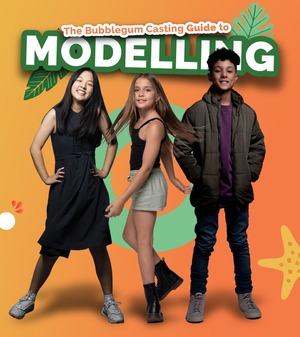
If you’ve ever watched your child light up in front of a camera, strike a pose in the hallway mirror, or happily ham it up for grandparents on FaceTime, you’ve probably had the thought cross your mind: should my child try modelling?
It’s a question we hear from Aussie parents every single week. And after more than 40 years guiding children through the industry (yes, Bubblegum Casting has been around since 1981), our honest answer is this: giving it a go, at least once, can be one of the most confidence-building, character-shaping experiences your child ever has — even if they never book a single job.
This isn’t about grooming the next cover star. It’s about what happens along the way. The life skills. The friendships. The quiet pride of a shy seven-year-old walking into a room full of strangers and walking out a little taller.
Let’s talk about what modelling really offers kids, what it doesn’t, and how to introduce your child to it in a way that keeps things fun, pressure-free, and genuinely good for them.
Is Modelling Actually Good for Kids?
Here’s the honest truth: modelling isn’t inherently good or bad for children. What makes the difference is how it’s approached. When it’s treated as a fun, occasional activity — the same way you might sign your child up for swimming or drama — it can be genuinely wonderful.
Across four decades of working with Australian families, the benefits parents mention most often aren’t about glamour or pay packets. They’re about the child coming home from a shoot and chatting confidently to a shop assistant the next day. They’re about a little one who used to hide behind mum’s legs suddenly volunteering to read aloud in class.
Modelling, at its best, puts children in gentle, low-stakes social situations with kind adults who are paid to make them feel comfortable. They learn to follow instructions, take direction, handle small disappointments, and celebrate small wins. That’s a pretty lovely package for a kid.
Of the children who’ve passed through our books since 1981, roughly three in four try it for a season or two and then move on to other interests — and that’s completely fine. The confidence stays with them regardless.
What Life Skills Does Modelling Teach Children?
Parents often come to us expecting modelling to be about looking pretty. They leave surprised by how much their child has actually learned. Here are the skills we see children pick up, shoot after shoot:
- Listening and following directions. A photographer might ask a four-year-old to “look out the window like you just spotted a rainbow.” Kids learn to listen carefully and respond creatively.
- Patience. Shoots involve waiting. Children learn that good things come to those who can sit still for five minutes.
- Handling rejection gracefully. Not every audition ends in a booking. Learning that “no” isn’t personal is one of the most valuable lessons a young person can carry into adulthood.
- Teamwork. A set is a mini workplace. Kids meet stylists, photographers, art directors, and other young talent. They learn that everyone has a role.
- Self-presentation. Not vanity — just the quiet confidence of knowing how to walk into a room, say hello, and introduce themselves.
- Resilience. A long day, bright lights, a hundred takes — and then doing it all again next week with a smile.
These are skills that transfer straight back into the classroom, the sports field, and eventually the workplace. Parents frequently tell us their child’s teachers have noticed a change — more eye contact, more willingness to speak up, more confidence during presentations.
How Does Modelling Help Shy Children?
This is the question we hear most often — and it’s usually from the parents of the quietest children in the room. “My little one barely says hello at birthday parties. Could modelling possibly be for her?”
The answer, surprisingly often, is yes.
Shy children frequently thrive in modelling because it’s structured. There’s no small talk to navigate, no playground politics, no unpredictable social dynamics. The photographer gives gentle cues. Mum or dad is right there. The environment is calm and the adults are warm.
We’ve watched children who wouldn’t speak above a whisper on day one come back six months later chatting happily to the receptionist about their weekend. The secret is that modelling doesn’t demand extroversion. It simply creates safe, repeated opportunities to be seen, to be noticed kindly, and to receive positive feedback from adults who aren’t mum and dad.
For a shy child, that can be magic.
If you think your child would benefit from even more social confidence practice, our acting classes pair beautifully with modelling work. They give kids a supportive room full of peers doing the same thing — which takes the pressure off enormously.
Will Modelling Affect My Child’s School Performance?
This is the worry that keeps sensible parents up at night, and it’s a good one to have. Your child’s education comes first. Always.
Here’s the reality of how modelling fits around school life in Australia: most shoots are scheduled during school holidays, on weekends, or occasionally on a pupil-free day. When a booking does fall during term, it’s usually a half-day at most, and regulations around child performers in every Australian state are specific and strict. There are rules about hours, breaks, tutoring on set for longer shoots, and parental supervision at all times.
In our experience, children who model occasionally actually tend to do better at school, not worse. Why? Because they’re learning focus, they’re practising confidence, and they come home with a story to tell. School becomes one of many interesting things in their week rather than the only thing.
Of course, if a child ever starts to feel stretched, the answer is simple: slow down or stop. Modelling should never, ever compete with schoolwork, sleep, or downtime. We always remind parents — if a booking doesn’t feel right, say no. No agency worth trusting will mind.
What If My Child Doesn’t Want to Continue?
Then they stop. It really is that simple.
This is probably the single most important thing we tell every parent who signs up with us: your child is allowed to change their mind at any time, for any reason, with no guilt and no pressure. Not after a month, not after a year, not after a contract renewal — any time.
Some children adore it and keep going for years. Some try a couple of castings and decide it’s not for them. Some take a break and come back two years later. All of these paths are completely normal, and none of them are failures.
What we don’t want to see — ever — is a child turning up to a shoot because mum or dad has booked it and they don’t want to let anyone down. That’s the opposite of what this should be.
A good rule of thumb: if getting your child ready for a casting starts to feel like a battle, it’s time to pause. The fun has to come first.
How Do Parents Support Child Models Without Being Pushy?
The best modelling parents we know share a few things in common. They’re calm. They’re curious about what their child thinks. They treat shoots like outings, not auditions for life. And they always, always let their child lead.
Here’s what supportive, non-pushy looks like in practice:
- Asking “did you have fun?” before “did you get the job?”
- Packing snacks, books, and spare undies — not pressure.
- Letting the child choose whether to wave goodbye to the photographer.
- Never critiquing how they “performed” on the drive home.
- Celebrating castings regardless of outcome.
- Keeping modelling in perspective — it’s one small part of a big, balanced childhood.
The parents whose children thrive longest in this industry are the ones who, frankly, seem the least invested in it. They show up, they smile, they support, and they let their kid be a kid.
How to Introduce Your Child to Modelling (Without Pressure)
If you’ve read this far and you’re thinking it might be worth a go, here’s a gentle, pressure-free way to explore it together.
1. Start with a conversation
Sit down with your child and ask what they think about being in photos. Explain what modelling actually is (photos in catalogues, on websites, in magazines) without hyping it up. Use simple language. Gauge their reaction. If they shrug or say “meh,” that’s your answer for now. If their eyes light up, you’ve got a green light to explore further.
2. Let them lead
Children are brilliant at telling us what they want if we give them space. Don’t ask leading questions. Don’t paint a glittery picture of fame. Just let your child tell you whether it sounds fun. Their enthusiasm (or lack of it) is the only compass you need.
3. Try an open casting call
A casting call is low-commitment and a lovely way to dip a toe in. Your child gets to meet the team, see what a real casting looks like, and decide for themselves whether they’d like to do more. Have a look at our open casting calls to see when we’re next holding one in Melbourne, Sydney, or Brisbane.
4. Keep it fun
Pack their favourite snack. Make it a special day out together. Grab a babycino on the way home. Whether the outcome is a booking or a “thanks for coming,” the day itself should feel like an adventure, not a test.
5. Never push for bookings
This is the golden rule. Don’t chase. Don’t compare your child to other kids. Don’t fret about who’s booking what. Bookings happen when they happen, and when they don’t, it means absolutely nothing about your child. Trust the process and enjoy the journey.
6. Let them stop anytime
Tell your child — out loud, in plain words — that they can stop whenever they want. No questions asked. Knowing they can leave is often the very thing that helps them stay and enjoy it.
What Parents Consistently Tell Us After 40+ Years
We’ve kept a fairly unscientific but very consistent tally of the feedback parents share with us after their child’s first year on our books. The patterns barely change, decade to decade:
- More than 80% of parents report a noticeable boost in their child’s confidence.
- Around 7 in 10 say their child has become better at talking to unfamiliar adults.
- Roughly 65% notice their child handling small disappointments more calmly.
- Almost every parent says their child made at least one new friend through castings or shoots.
- And nearly all of them — regardless of whether their child booked a single job — say they’d encourage other families to give it a try.
Those are the numbers we’re proudest of. Not booking rates, not billings. The quiet, steady confidence we see kids build over time.
Frequently Asked Questions
Is it safe for my child to try modelling?
With a reputable agency, yes. In Australia, there are strict regulations around child performers — including mandatory parental presence on set, maximum working hours, rest breaks, and child safety protocols. At Bubblegum Casting, a parent or guardian is always with their child at castings and on shoots. Safety isn’t a feature of good practice; it’s the foundation.
What age is best to start?
Honestly, there’s no perfect age. We represent babies through to teenagers, and the right moment to start is whenever your child seems genuinely interested and comfortable being photographed. Some families start with babies in nappy campaigns. Others come to us when their eight-year-old begs to give it a try. Both are fine.
Does modelling interfere with school?
In our experience, no — provided families keep a sensible balance. Shoots are mostly scheduled around school hours, and when they’re not, the bookings tend to be short. School always comes first, and any good agency will respect that without question.
What if my child is shy?
Shy kids often flourish. The structure of a shoot is calm and predictable, and children build confidence in a gentle, repeatable way. If you’d like extra support, pairing modelling with our acting classes can give shy children a lovely soft landing.
Do babies benefit from modelling?
Babies obviously won’t remember their shoots, but the benefit to babies is really about the experience being positive and stress-free. On a Bubblegum Casting set, babies are handled gently, shoots are kept short, and parents are right beside them the whole time. Many families also love having beautiful professional photos as a keepsake.
Can we try it without committing long-term?
Absolutely. There’s no lock-in, no pressure, and no expectation to continue if it’s not clicking for your family. You can try a single casting, see how your child feels, and make a decision from there. That’s exactly how we like families to begin.
Ready to See If Modelling Suits Your Child?
If your child is curious, confident (or quietly hopeful), and you’d like to explore whether modelling might be a good fit, we’d love to meet them. You can have a look at the kids already on our books to get a feel for the variety of children we represent — because there really is no single “look” we’re after. Real kids, real personalities, real smiles.
When you’re ready, pop over to our application form and tell us a little about your child. There’s no obligation, no cost to apply, and no pressure. Just a friendly chat and a chance to see where things might lead.
Forty years in, we still believe every child deserves the chance to try something that helps them feel seen, heard, and proud of themselves. Sometimes that’s sport. Sometimes it’s music. And sometimes — beautifully, unexpectedly — it’s modelling.
Give it a go. At the very least, your child will come away a little more confident. At best, they’ll discover something they absolutely love.